
The $100 Billion Medicare Fraud Racket You've Never Heard Of

If you believe government fraud is mainly a blue-state problem driven by overly generous benefits, the letter the administration just sent to Florida complicates that story.
This week, the Centers for Medicare and Medicaid Services sent a scathing letter to the Governor detailing the state’s “well-documented history of health care fraud” and demanding a detailed accounting of how it oversees its Medicaid program. Florida has 30 days to respond.
You don’t send that kind of letter unless the problem is persistent. And in South Florida, it’s an epidemic—one that has even penetrated the oversight apparatus itself.
Consider the case of Manuel Delgado, an accreditation inspector who pleaded guilty last year to conspiracy to obstruct HHS and CMS in their oversight of Medicare. Delgado’s job was to review durable medical equipment companies to determine whether they met CMS quality standards —accreditation that was required before a company could bill Medicare.
Instead, he not only took cash bribes from DME company owners to rubber-stamp their applications, but he set up his own DME companies in the names of family members, inspected them himself, obtained their accreditation, and sold the now-Medicare-enrolled shells to others. The estimated value of the companies he fraudulently accredited exceeded $1.4 million.
Delgado is just one node in a South Florida machine that has corrupted every stage of the Medicare pipeline from accreditation to ordering to billing to payment. The same ecosystem has been producing billion-dollar fraud schemes year after year.
The cases are alarming in scale. One recent Florida case cost taxpayers $1 billion. A healthcare software company helped generate false doctor’s orders at scale, which were then used to bill Medicare for braces and equipment patients never needed. This was infrastructure—an assembly line for converting fake medical necessity into real payments. In another case, executives were convicted in a $34 million scheme targeting elderly beneficiaries. Another supplier was sentenced in a $61 million fraud. Thousands of unnecessary devices shipped to patients who never asked for them, each one triggering a reimbursement.
Genetic testing runs the same playbook. A Florida lab owner pleaded guilty to a $52 million fraud built on telemarketing and kickbacks. Seniors were called and offered “free” cancer screenings. Doctors with no relationship to the patient signed the orders. Labs billed Medicare. A telemarketer was sentenced in a separate $67 million scheme pushing unnecessary genetic tests through call centers. One former investigator I spoke with said these fraud call centers are ubiquitous across South Florida.
What’s operating here is not a crime wave. It is an industry with its own supply chains, labor markets, and—as the Delgado case makes clear—its own corrupted gatekeepers. Telemarketers find the patients. Orders are obtained through deception or outright fabrication. Crooked inspectors wave the suppliers through. Providers and suppliers bill at volume. Money moves fast. By the time enforcement arrives, the payments are gone.
The CMS letter points to Florida’s outsized role in the 2025 national healthcare fraud takedown—more than $100 billion in alleged fraud tied to telemedicine, genetic testing, and durable medical equipment. It flags the same patterns in Medicaid: home services billed but not delivered, transportation that never occurred, behavioral health claims for services that didn’t happen. The model travels across programs throughout the state.
These schemes persist because the system makes them possible.
Enrollment pathways let questionable actors in. The screening framework under 42 CFR § 424.518 catches a few at the door, but checks occur primarily at enrollment and revalidation every five years, leaving vast gaps in between.
The inspectors charged with keeping them out can be bought.
Data is fragmented across Medicare Administrative Contractors, state Medicaid programs, and law enforcement agencies, with no shared real-time system connecting them.
Analytics are limited. CMS lacks the continuous, risk-scored monitoring that financial regulators use to detect suspicious transaction patterns as they emerge.
Payment systems are designed to move money quickly, not to verify before paying; claims are processed and paid automatically, with medical necessity review happening after the fact, if at all.
And when fraud is detected, the revocation process under § 424.535 requires CMS to build an individualized case against each supplier one at a time — a pace that is structurally mismatched against criminal networks operating dozens of shell companies simultaneously. Enforcement comes after the fact, and by then, the money is long gone.
Florida sits at the center of this because the state has proven to be an efficient place for these models to scale. Dense healthcare markets, large Medicare populations, established telemarketing networks, and regulatory gaps create an environment where the same schemes recur with new actors and larger dollar amounts.
The current administration has framed government fraud as a problem of Democratic governance—bloated programs, lax oversight, blue-state permissiveness. Florida undermines that narrative completely. This is a state with Republican leadership at every level of government, and it has been the single largest source of Medicare and Medicaid fraud in the country for years. These schemes did not emerge from overly generous benefits or progressive policy. They emerged from gaps in enrollment, oversight, and payment infrastructure that exist everywhere—and that Florida, by every measure, has failed to close.
Fraud isn’t a Democratic issue or a Republican one.
Fraud follows opportunity. And the system is still providing it.
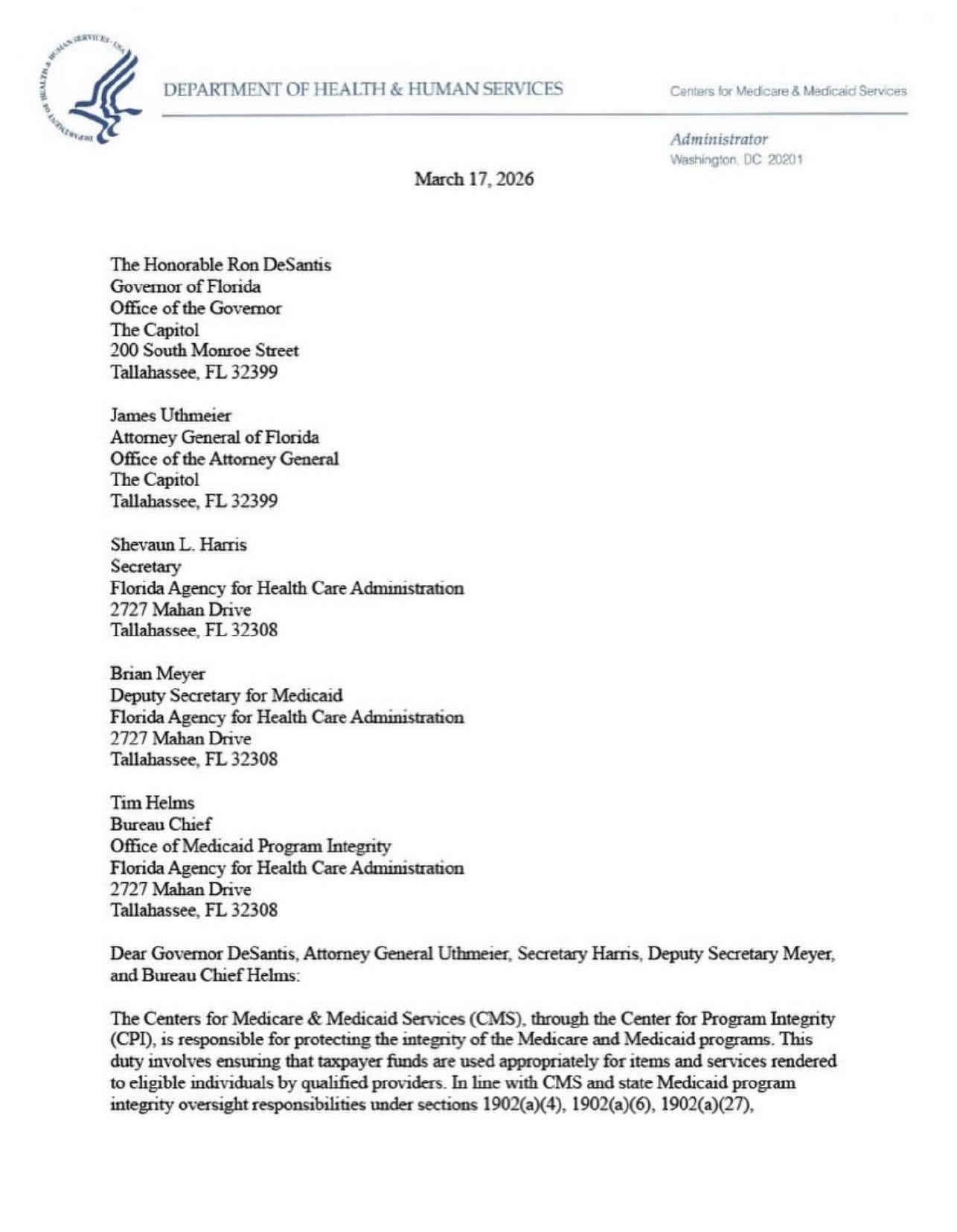
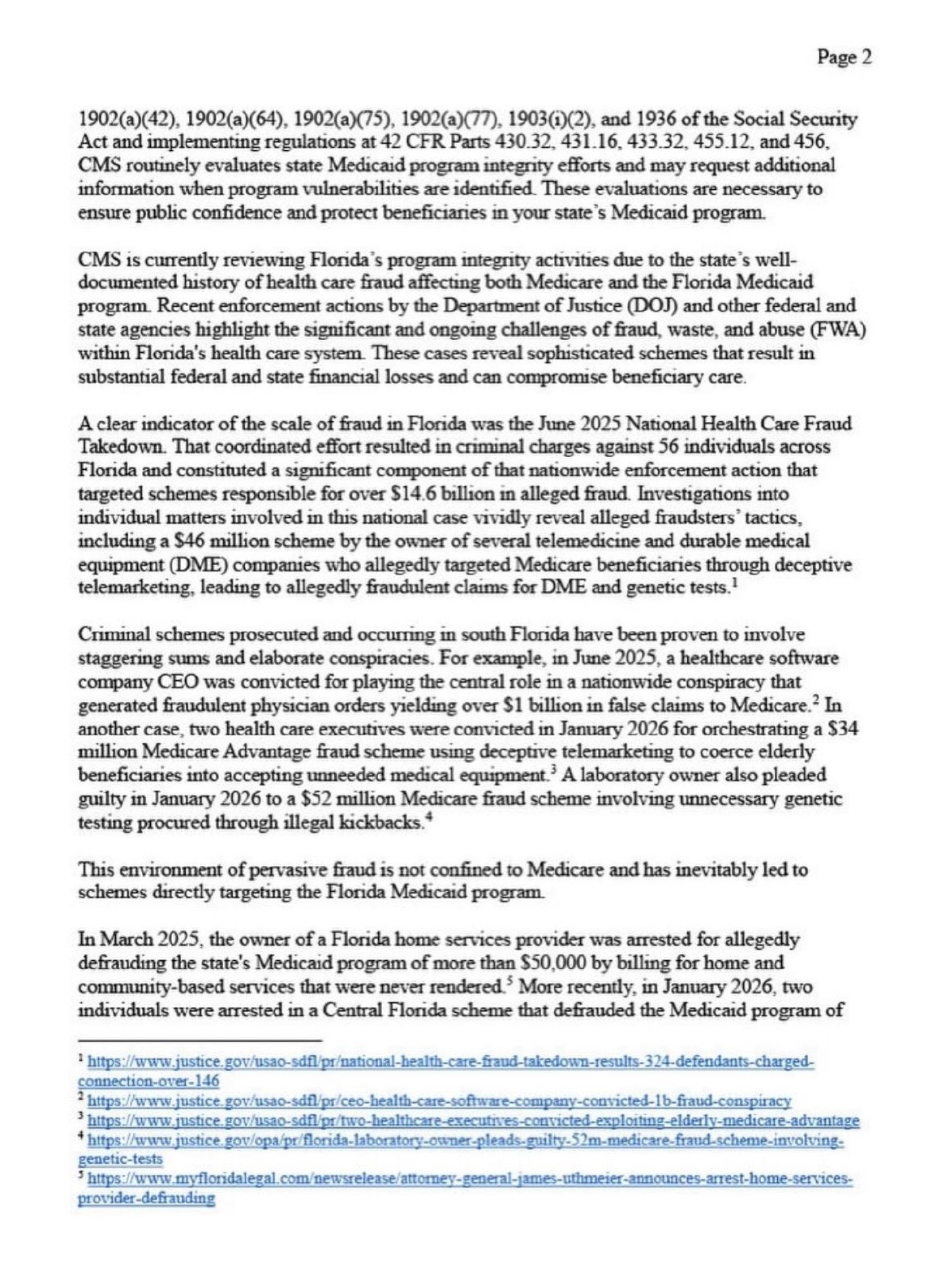
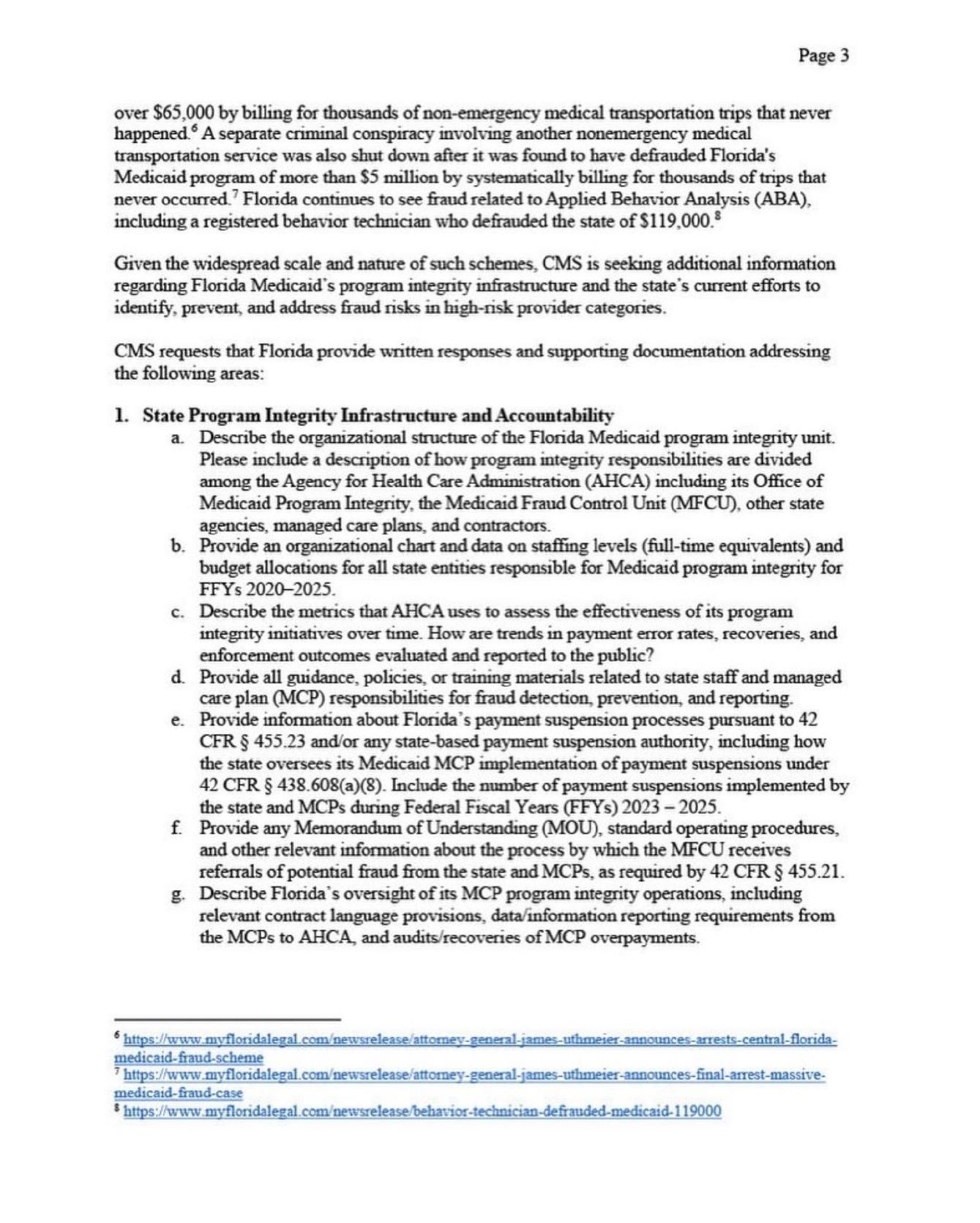
Photo by National Cancer Institute on Unsplash. Article first posted on GovIntegrity.