
The “Louvre” Password and the Paradox of Cybersecurity
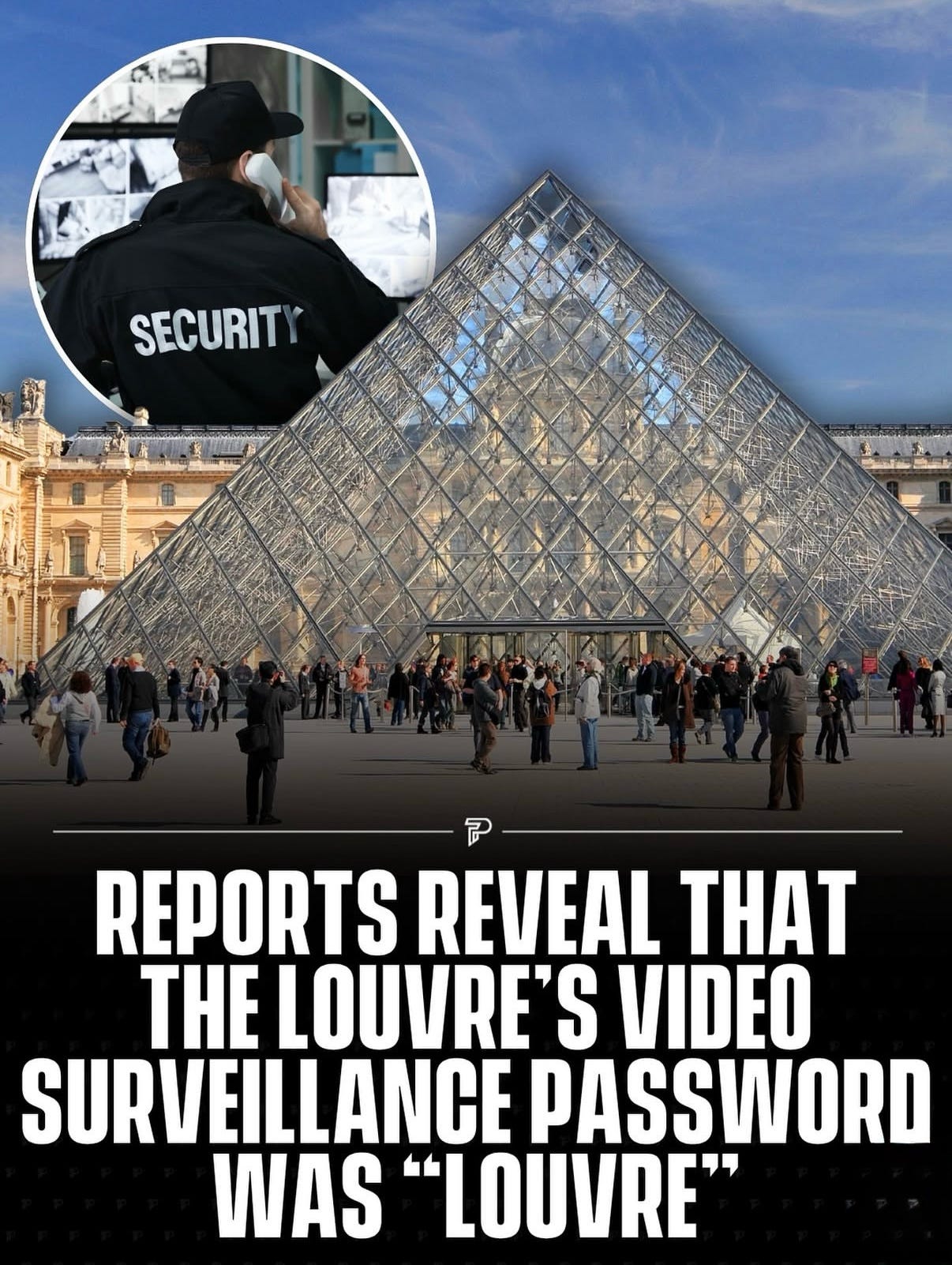
When news broke this week that members of the Louvre’s security team had used “Louvre” as their system password, cybersecurity professionals everywhere collectively sighed. It wasn’t just ironic, it was familiar.
Here is one of the world’s most iconic institutions, custodian of some of humanity’s greatest treasures, undone by the simplest vulnerability imaginable. No nation-state adversary. No zero-day exploit. Just a password that said exactly what it was protecting.
While it’s tempting to laugh, the story captures the essence of our problem. In 2025, the front lines of cybersecurity are still defined by the habits of ordinary users.
In the world of cyber-risk, our attention focuses on tomorrow’s frontier: AI-powered threat detection, zero-trust architectures, quantum-resistant encryption. But the most persistent breach vector remains far more prosaic: the password.
The Numbers Don’t Lie — But We Keep Ignoring Them
According to multiple industry surveys, eight in ten hacking-related breaches exploit weak, stolen or reused credentials.
Compromised passwords are the key enabler in roughly half of all data-breach incidents
Staggeringly, over 16 billion login credentials have been compiled in exposed datasets as of 2025
End-user behavior compounds the risk: In one study, 72 percent of Gen Z respondents admitted to re-using passwords; 59 percent reused even immediately after a known breach.
Poor credential hygiene doesn’t just raise risk—it is risk.
The Paradox of Cyber Defense: Strong Walls, Unlocked Doors
At an organizational level, we invest heavily in perimeter defenses, cloud security, Identity and Access Management etc., yet the most basic credential practices lag. Organizations build sophisticated fortresses like zero-trust frameworks, endpoint detection, and continuous monitoring, but leave the gatehouse unguarded. The result is what might be termed the paradox of modern cybersecurity: Impenetrable systems undone by predictable human shortcuts.
We’ve built fortresses with unlocked doors.
The failure isn’t technological. It’s behavioral. Three persistent blind spots keep the problem alive:
Credential anarchy: Passwords sit outside formal governance structures. Users manage them, reuse them, or circumvent policies with minimal oversight.
Perverse incentives: Users prioritize convenience over control. For many users, password creation and management is seen as overhead rather than a strategic act of defense. That mentality influences behavior. People are more likely to use weak passwords, reuse passwords, and avoid additional friction when they don’t have strong incentives to do otherwise.
Cultural fatigue: Often, security feels like bureaucracy, not protection. Technical controls matter, but without a culture that treats credential hygiene as an organizational asset, the “human link” remains the weak point.
From Password Policy to Credential Discipline
To transform a vulnerability into an advantage, leaders should treat credential hygiene as a strategic capability. Six actions leaders can take are:
Govern and measure it. Define KPIs around things like percent of accounts with unique passwords, unique credential ratio, MFA usage, dormant-account rate, credential leak incidents and report them in dashboards.
Engineer renewal. Credential hygiene is not “set and forget”. It involves periodic audits of reuse, stale access, orphan credentials, and dormant accounts. Audit, expire, and retire passwords with the same rigor as system patches.
Harden the habit. Mandate enterprise-wide password managers, pair every login with MFA (preferably phishing-resistant, e.g.,hardware keys, app-based push) and enforce unique credentials.
Enforce access discipline. Adopt the principle of least privilege. Credentials should map to minimal access. Combine this with tiered risk measures (e.g., high-value credentials demand stronger authentication and monitoring).
Educate continuously. Technical controls alone won’t suffice. Cultivate a culture where each user understands the why of credential hygiene, recognizes their role in systemic resilience, and is supported with seamless tools (not just punitive policies).
Plan for failure. Recognize that credential exposure is inevitable. Build monitoring for credential-dump feeds, breach notifications, and credential-stuffing attempts so that when exposure occurs, you respond rapidly. Assume exposure will happen and design for containment.
Public Sector Reality Check: The Cost of Complacency
In the public sector context, the stakes are uniquely high. Mission-critical systems, sensitive personal data, public trust, and oversight exposure all increase the vulnerability of government systems. A single credential compromise can cascade into operational and reputational risk for an agency and can cost not only taxpayer dollars but public trust.
Beyond compliance, the imperative is one of risk-management and resilience. Government leaders must ensure that even when part of the perimeter fails (and we know it will), the organization has internal discipline to mitigate, contain, and recover. Effective credential hygiene is one of the most cost-effective ways to raise that internal barrier.
The Leadership Imperative: Make Credential Hygiene a KPI for Trust
Cyber resilience starts not with new technology but with consistent, disciplined execution of fundamentals. Treat password hygiene as:
A governance issue, not an IT task.
A risk-management indicator, not a help-desk annoyance.
A trust signal to regulators, auditors, and citizens alike.
Leadership attention is the ultimate control. When executives treat credential hygiene as a strategic risk indicator, not a technical nuisance, it changes everything, from employee behavior to audit posture. The most powerful barriers don’t always require breakthrough tech. Sometimes they rely on consistent, disciplined execution of “the basics.”
Article first posted on GovIntegrity.