
The New Gilded Age
In September 2022, when FBI agents searched Senator Robert Menendez’s home in suburban New Jersey, they found something that looked less like a modern ethics scandal and more like a relic from a different era. Gold bars in drawers. Envelopes crammed with cash inside jackets. Luxury watches still boxed. Two years later, a jury convicted Menendez of bribery and acting as a foreign agent. The shock lasted a news cycle, then thinned out. It felt like one more episode in a political environment saturated with irregularities—the sort of thing people now register and move past quickly.
In September 2024, FBI agents carried out a sting operation targeting Tom Homan, the former acting director of Immigration and Customs Enforcement and a prominent immigration adviser in Donald Trump’s political orbit. Undercover agents posed as executives from a private detention contractor seeking Homan’s help in securing lucrative federal immigration-enforcement contracts if Trump returned to office. As part of the operation, the agents arranged a meeting with Homan in the parking lot of a hotel near Houston. There, they handed him an envelope containing $50,000 in cash, which he accepted while discussing how he could assist the company once a new administration took power.
Investigators viewed the exchange as a textbook bribery setup: a recorded meeting, clear audio, marked bills. But after Trump’s victory in November, the investigation stalled. Within weeks, Justice Department leadership ordered the probe closed, concluding—despite the recordings and physical evidence—that the government lacked a prosecutable case. The cash was returned, no charges were filed, and the episode remained largely out of public view until it surfaced through leaks months later.
Across the Atlantic, Ukraine was dealing with its own brewing scandal. In early 2025, more than three years into the grinding war, leaked recordings and internal documents pointed to a major contracting scheme inside the state nuclear company Energoatom.
As the corruption scandal unfolds in Ukraine, a disappointed citizenry is coming to terms with the reality that procurement contracts appear to have been steered; payments routed through intermediaries; senior officials close to the once-lauded Zelensky implicated. The scandal has resulted so far in the removal of both the justice and energy ministers. The episode shows how deeply embedded certain networks remain, even as the country attempts to modernize its governance and maintain Western trust in the midst of an existential conflict.
Meanwhile, in Washington, the U.S. government has adjusted its own posture toward corruption and enforcement. Early in 2025, the White House issued an executive order suspending enforcement of the Foreign Corrupt Practices Act (FCPA)—the statute that, since 1977, has anchored America’s stance against overseas bribery. The pause was framed as a matter of national competitiveness, but the practical effect was to signal an openness to recalibrating a rule that had long been treated as foundational. Corporate compliance officers, foreign governments, and prosecutors took notice.
These events are not directly related, but they share a feature: each reflects a system under pressure in which corruption surfaces not as a shocking departure but as something accommodated, a recurring pattern in political life. This is a familiar cycle in American history. Corruption becomes ambient, enforcement becomes flexible, public expectations adjust downward, and the gap between formal rules and actual practice widens until institutions scramble to catch up.
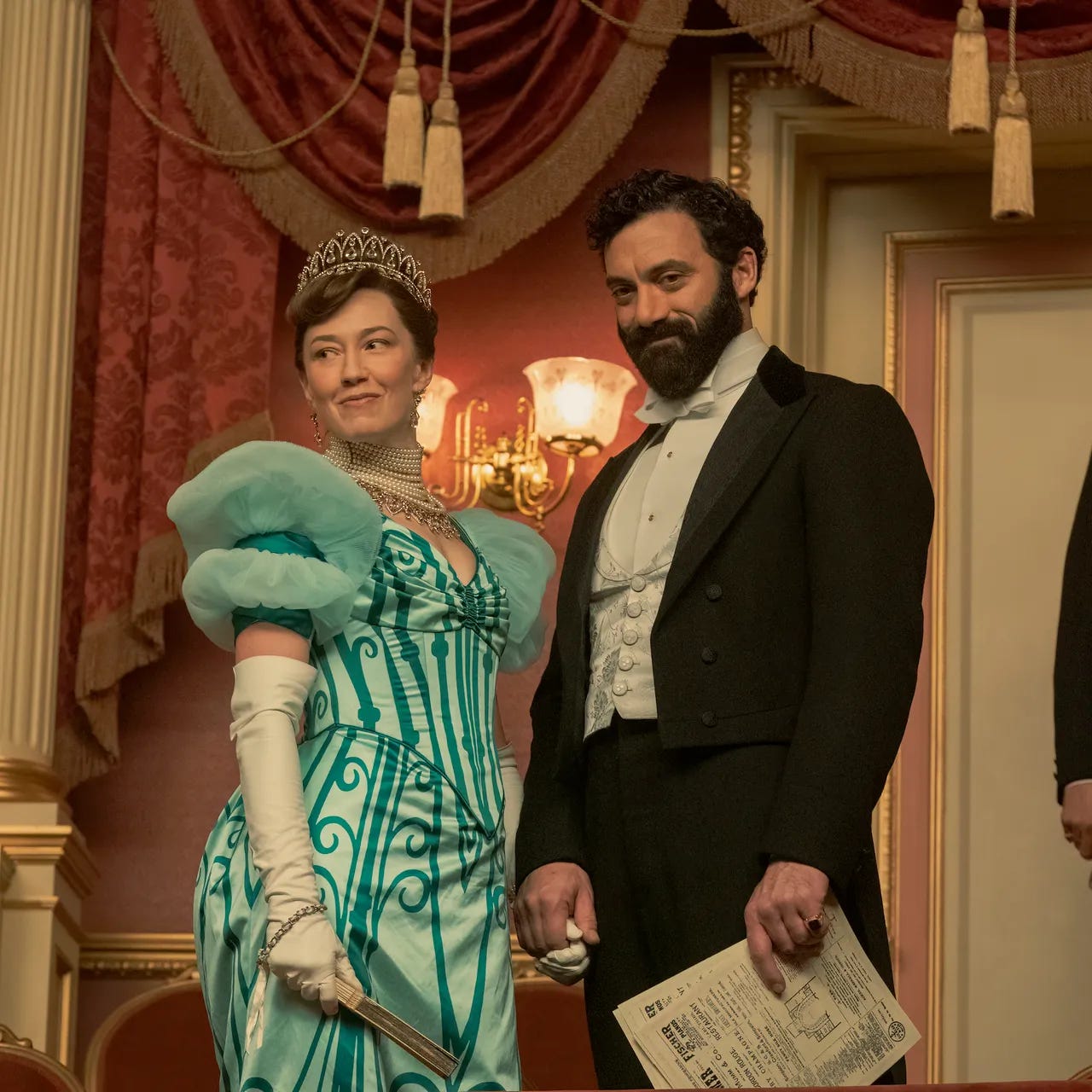
That cycle is what Americans lived through in the late 19th century, when graft was woven through the daily operations of government. And it is what the country confronted again in the early 1970s, during the Nixon administration, when the limits of normal presidential behavior gave way to clandestine operations, pressure campaigns on federal agencies, and a White House confident that institutional checks could be managed or neutralized. The aftermath of Watergate reshaped the oversight architecture for a generation. What’s notable now is not that history is repeating, but that similar structural weaknesses are emerging around the edges of the contemporary system.
A Convergence of Symptoms
For years, politics in the United States operated under a comforting assumption: corruption was something that happened elsewhere—an affliction of weaker states, captured agencies, or fledgling democracies. The U.S. had its scandals, but the reflexive belief was that institutions here were strong enough to manage them. Ukraine, by contrast, was often presented in Western discourse as a country fighting corruption at the same time it fought a war, a dual challenge framed as evidence of its precarious institutional foundation.
The Menendez and Homan cases are throwbacks. These aren’t stories of vague influence-peddling or ambiguous ethical lines; they are literal bribery, packed into envelopes or stashed between sweaters. The imagery underscores the gap between the assumption of American institutional resilience and the reality that even senior officials can operate for years with minimal detection if the system expects impropriety in only subtle, modern forms.
The FCPA suspension adds another layer. The U.S. position on foreign bribery had been consistent since the Carter administration: American companies should not pay bribes abroad, even if competitors do. This wasn’t simply a moral stance; it was a mechanism for shaping global norms. When the executive branch paused enforcement, it quietly rewrote the signal. Instead of clear expectations, there was ambiguity. Discretion.
These developments sit alongside smaller but telling signs: growing skepticism toward oversight bodies, public fatigue with ethics controversies, and political rhetoric that casts investigations as acts of disloyalty or obstruction. None of this amounts to a crisis on its own, but together they produce an atmosphere not unlike the pre-Watergate years, when the executive branch tested the boundaries of what it could ask agencies to do and when those agencies—under political pressure—learned to calibrate their responsiveness to the preferences of the White House.
Ukraine’s Institutional Strain
Ukraine’s anti-corruption agencies—NABU, SAPO, and NACP—were created after the country’s 2014 revolution, with the support of European and American partners who insisted that Western financial assistance be tied to tangible governance reforms. These agencies became some of the most trusted institutions in the country. But they were also resented by political and economic networks that had adapted over decades to operate with minimal oversight. The war dramatically intensified all of these pressures. Enormous flows of military and humanitarian aid required rapid procurement processes; civil servants faced responsibilities that under normal circumstances would be distributed across multiple agencies. In this environment, the opportunity for graft grows not because people become more unscrupulous, but because oversight capacity struggles to keep pace with the scale of need.
The Energoatom scandal illustrates this dynamic clearly. The state was under attack; resources were stretched; the public expected unity; and yet networks capable of orchestrating a nine-figure contracting scheme persisted. The dismissal of two ministers suggests a government willing to act, even when politically costly. Yet parliamentary efforts to curb the independence of anti-corruption agencies at the same time suggested a systemic ambivalence: a reformist trajectory at odds with a control-oriented tradition.
Systems under extreme pressure reverting to familiar patterns is not unique to Ukraine. The U.S. has its own history of institutional regression under stress.
An American Uncomfortable Precedent
The American system’s vulnerability to political pressure became clear during the Nixon years, when the White House exerted significant influence over federal agencies. The federal bureaucracy was asked to carry out politically oriented investigations, and intelligence and law enforcement instruments extended into domestic political operations in ways that exceeded their legal authority. These patterns had developed gradually over multiple administrations, but under Nixon they reached a level that the existing oversight architecture simply could not absorb.
What emerged from that collapse was the modern Inspector General system—a network of internal watchdogs embedded within federal agencies but designed to operate with independent mandate. The Inspector General Act of 1978 created offices inside multiple departments to investigate and report fraud, waste, and abuse. The idea was to prevent the executive branch from leaning on agencies in the way Nixon had, and to ensure that agency misconduct did not require a full-blown political crisis before being addressed.
The IG system depends on a political environment that tolerates scrutiny.
The firing of 17 IGs in January 2025 was an alarming escalation. The IG community is under siege, with many encountering pressure to modify findings or slow-walk sensitive reviews. This erosion mirrors the conditions that made Watergate possible: executive impatience with or outright hostility toward oversight, agencies learning to anticipate political reactions, and concerned investigators navigating uncertain ground about how far they can go without triggering retaliation.
A weakened oversight culture does not cause corruption, but it creates conditions in which corruption persists without encountering early resistance. A system that pressures or marginalizes internal watchdogs recreates the conditions that the IG network was originally built to guard against.
Echoes of the Gilded Age
The late 19th century is often remembered through its industrial titans, but its political system was defined by graft embedded in routine operations: local machines trading jobs and licenses for votes, contracts awarded through favors, and a public sense that public office was itself a vehicle for private gain. Reformers of the Progressive Era built new institutions—civil-service exams, procurement rules, independent commissions—to replace a system that was technically functional but substantively compromised.
Today’s environment looks different, but the rhythm is familiar: large sums of public money moving quickly (through pandemic relief, infrastructure spending, energy subsidies, wartime aid); oversight bodies facing political roadblocks; scandals that produce outrage but no lasting structural change; enforcement priorities shifting with political leadership; and a public reaction to corruption that can aptly be described as resignation.
The resemblances are not aesthetic—the gold bars and cash-filled jackets may feel vintage—but structural. Corruption becomes easier not because laws change dramatically, but because the surrounding environment becomes more permissive or apathetic. When boundaries blur, officials begin testing them.
Where This Leaves Us
The recent developments in Washington and Kyiv do not suggest imminent institutional collapse. They show a pattern of drift: corruption emerging through familiar channels, oversight structures absorbing political pressure, and norms once considered fixed becoming flexible. The historical parallels to the Gilded Age and the Nixon era are less about identical outcomes and more about the reappearance of the same underlying vulnerabilities.
In both earlier periods, institutions were forced to confront their own limitations only after patterns of corruption became too embedded to ignore. The U.S. responded with civil-service reforms, creation of regulatory agencies, the Inspector General system. Ukraine is attempting its own version of institutional redesign under far more difficult circumstances. Both countries now face environments where corruption adapts quickly and where the mechanisms designed to detect it must navigate increasingly variable political terrain.
The question is not whether corruption is returning—it never really disappears—but whether the systems built to contain it remain strong enough to do the work they were created for.
Notes & Sources
U.S. Department of Justice, “Former U.S. Senator Robert Menendez, His Wife, and Three New Jersey Businessmen Charged Bribery,” Sept. 22, 2023.
U.S. Department of Justice, “Former U.S. Senator Robert Menendez Sentenced to 11 Years in Prison for Bribery, Foreign Agent and Acting as an Agent of Egypt,” Jan. 29, 2025.
U.S. Department of Justice, Statement of U.S. Attorney Damian Williams on the convictions of Senator Menendez and others, July 16, 2024.
New Jersey Monitor, “Gold bars in baggies and cash crammed in boots: prosecutors detail Menendez’s hoarded riches,” May 16, 2024.
White House, “Pausing Foreign Corrupt Practices Act Enforcement to Further American Economic and National Security,” Feb. 10, 2025.
White Case Alert, “Significant Changes in Foreign Corrupt Practices Act Enforcement,” Feb. 12, 2025.
IBA, “US Presidency: Pause on FCPA an ‘unwelcome signal’ for global fight against bribery,” Apr. 2, 2025.
Kyiv Independent, “Parliament fires justice, energy ministers implicated in Ukraine’s biggest corruption scandal,” Nov. 19, 2025.
Al Jazeera, “Ukraine justice, energy ministers submit resignations amid corruption probe,” Nov. 12, 2025.
Wikipedia (for background), “Inspector General Act of 1978.”
OGE Leadership Notes, “Why Doesn’t OGE Do More Ethics Investigations?” Aug. 1, 2022.
Laguarda, “Challenges to the Independence of Inspectors General,” Georgetown University Public Policy Journal, 2021.
Article first posted on GovIntegrity.